Single-Agent vs Multi-Agent AI: Which One Actually Scales in the Enterprise?
By Delos — 2026-10-18
Single-agent or multi-agent AI? A practical 2026 guide to the trade-offs, costs, and when each architecture actually scales in the enterprise.
Every vendor demo in 2026 shows a swarm of AI agents talking to each other. It looks impressive. But most enterprise teams shipping real value are quietly asking a sharper question: do we actually need more than one agent? The honest answer is that single-agent and multi-agent architectures solve different problems, and picking the wrong one is the fastest way to burn a budget. Here is how to decide.
What the two architectures really mean
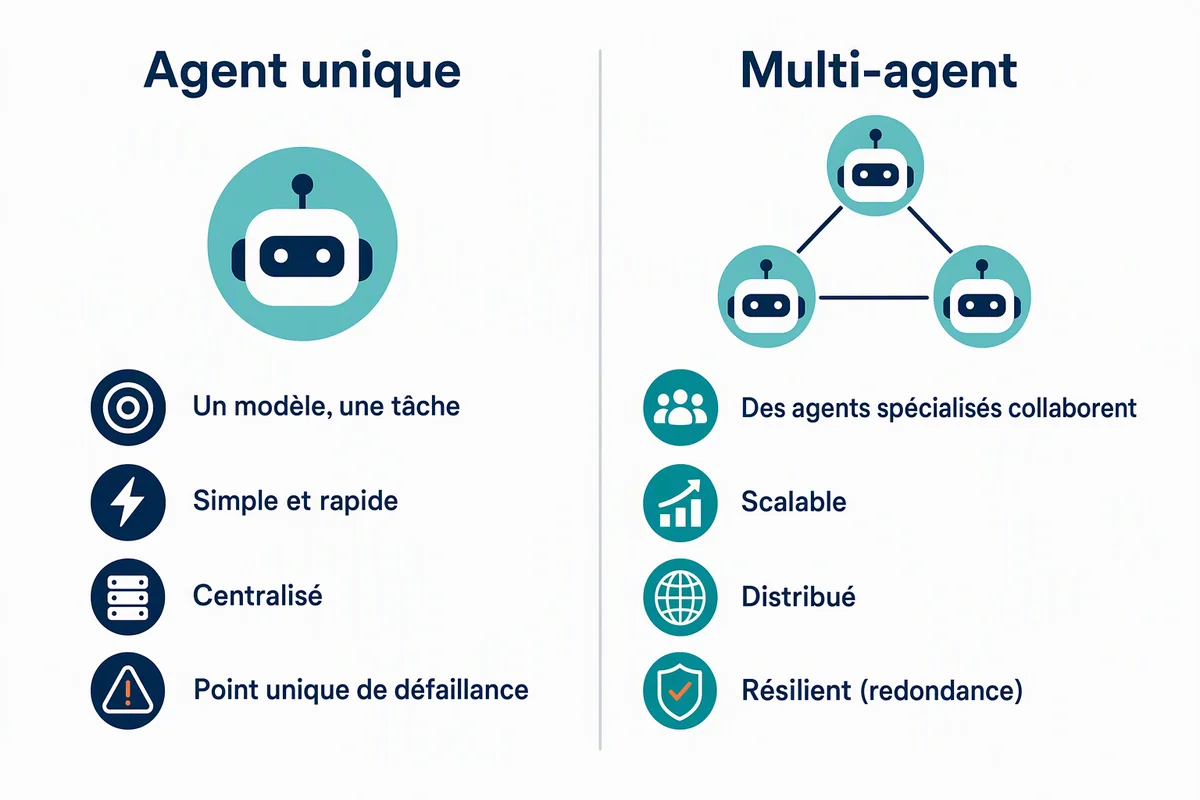
A single-agent system is one model, equipped with tools and memory, that reasons through a task from start to finish. It plans, calls an API, reads the result, and loops until the job is done. A multi-agent system splits the work across several specialized agents (a planner, a researcher, a writer, a checker) coordinated by an orchestrator that decides who acts next and how results are passed along. Anthropic’s engineering guidance on building effective agents explains these patterns in practice.
The difference is not cosmetic. A single agent keeps all context in one place and is simple to debug. A multi-agent system trades that simplicity for specialization and parallelism, at the cost of coordination overhead.
For a visual introduction to the architecture, watch IBM Technology’s explanation:
The numbers behind the hype
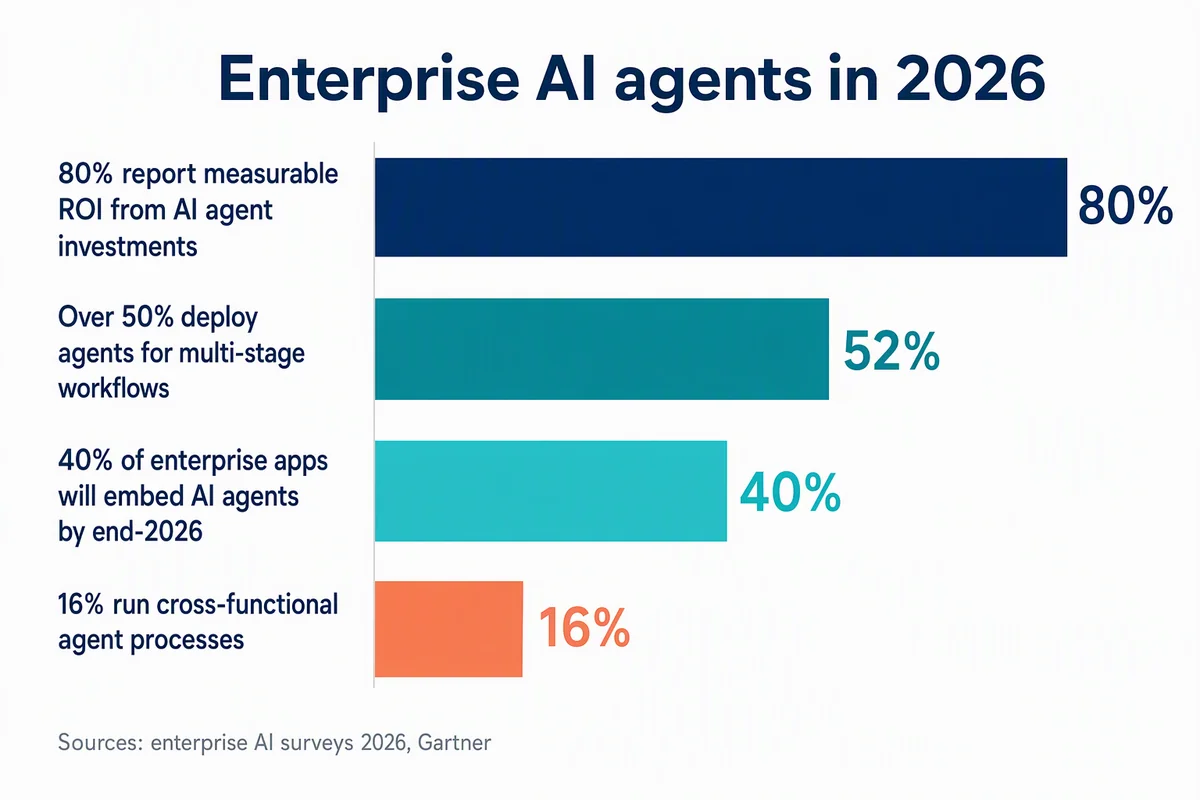
Agentic AI is moving from pilots to production fast. Surveys in 2026 report that around 80% of organizations investing in AI agents say they already see measurable ROI, and more than half now run agents on multi-stage workflows rather than one-shot tasks. Gartner’s analysis of intelligent agents expects roughly 40% of enterprise applications to embed task-specific AI agents by the end of 2026, up from near zero in 2024. Yet the same research shows only a minority (around 16%) run genuinely cross-functional agent processes, a reminder that coordinated multi-agent deployments are still the exception, not the rule.
When a single agent is the right call
Reach for one agent when the task is well-scoped and the context fits comfortably in a single model’s window. Think of a support assistant that answers questions against a knowledge base, an invoice extractor, or a code reviewer on a defined repo. Our look at AI customer service in 2026 shows why focused, bounded support agents are a useful starting point. One agent means one place to log, one prompt to tune, and one bill to watch. Teams routinely over-engineer here: if a single capable model with the right tools already does the job, adding agents only adds latency, cost, and failure modes.
When multi-agent earns its keep
Multi-agent systems pay off when the work is genuinely heterogeneous or too large for one context window. A due-diligence workflow that researches a company, cross-checks filings, drafts a memo, and audits its own claims benefits from specialists that each stay focused and shorter-prompted. The pattern also helps when you need parallelism (ten agents screening ten suppliers at once) or resilience (if one agent fails, the orchestrator reroutes). The trade-off is real: more moving parts, harder evaluation, and the ever-present risk of agents compounding each other’s errors. See our guide to agentic AI workflows for more enterprise examples.
The hidden cost: coordination
Most multi-agent failures are not reasoning failures, they are coordination failures: an orchestrator that loops, agents that pass stale context, or a hand-off that drops a crucial constraint. Before scaling to many agents, invest in clear hand-off contracts, strict tool permissions, and end-to-end tracing. If you cannot observe what each agent did and why, you cannot run it in production. McKinsey’s research on agentic AI provides further context on enterprise deployment.
A practical decision rule
Start with the simplest thing that works: a single agent with good tools and tight evaluation. Add a second agent only when you can name the specific limit you are hitting, context length, conflicting objectives, or the need for parallel throughput. In other words, let the bottleneck justify the architecture, not the other way around. This is exactly how Delos builds its own digital Workers: each Worker is a focused agent with a clear role, and they collaborate only when a task genuinely spans several of them.
The bottom line
Multi-agent is not more advanced than single-agent, it is a different tool for a different shape of problem. The teams winning in 2026 are not the ones with the most agents; they are the ones who match the architecture to the task, measure relentlessly, and resist complexity until it earns its place.